- Chris Comans
- 0 Comments
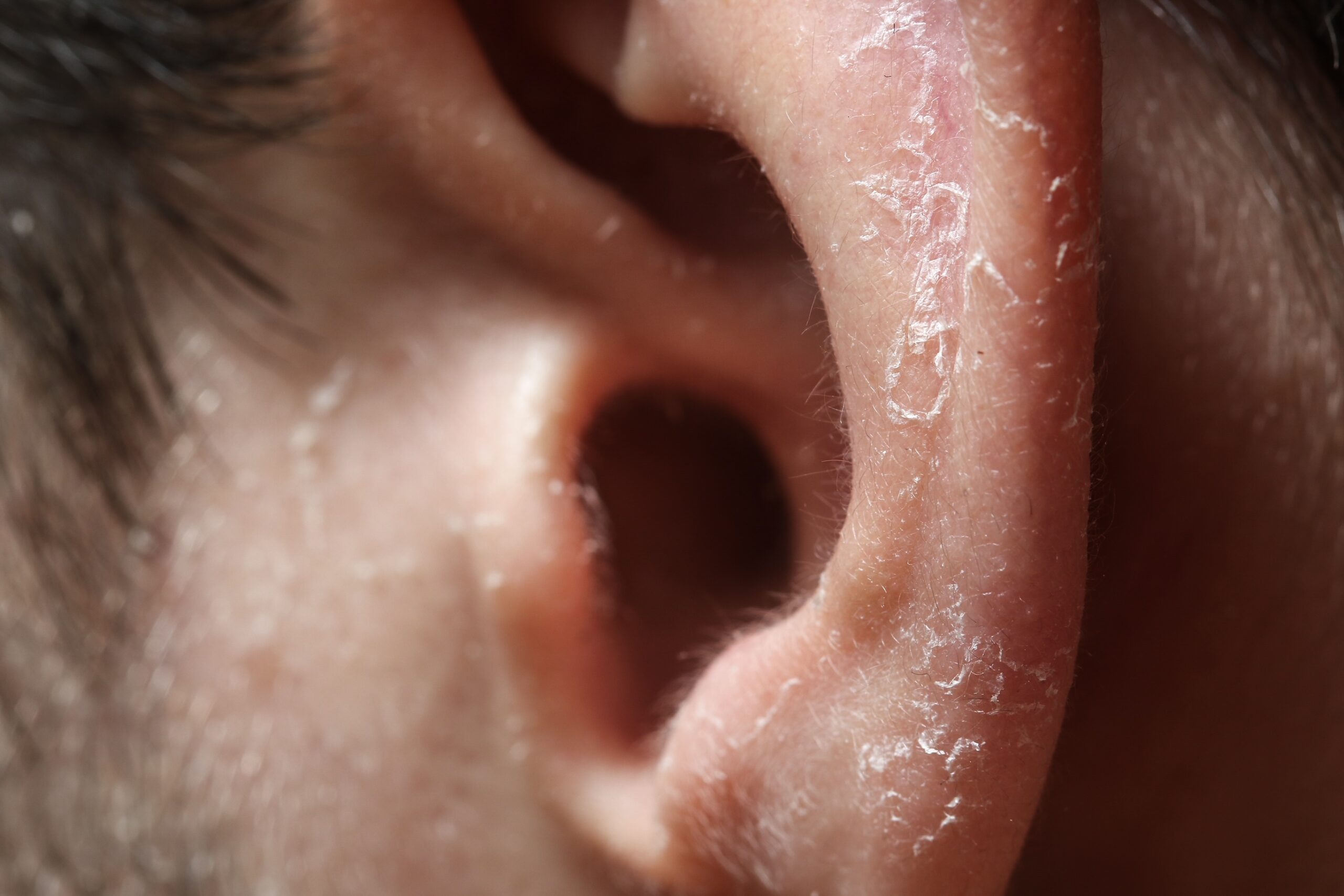
Two of the most common skin cancers on the ear are basal cell carcinoma (BCC) and squamous cell carcinoma (SCC). Melanoma can also appear on the ear, and you can read more about understanding melanoma.
Basal Cell Carcinoma
A BCC usually appears as a pearly lump, a scaly patch, or a sore that doesn’t heal. It often grows slowly, which is why it can be mistaken for a pimple, a scab or a patch of dry skin. If a spot keeps coming back in the same place, it deserves a professional look.
Squamous Cell Carcinoma
An SCC often appears as a thickened, scaly spot, sometimes tender or crusted. It can develop from a rough, sun-damaged patch that never fully settles, so a patch that keeps returning should be checked rather than assumed to be harmless.
Melanoma on the Ear
Melanoma on the ear can look like a new dark spot or a mole that changes over time. Some melanomas are pink, red or skin coloured rather than dark, so colour alone is not a reliable guide.
Look for a spot that is new, growing, uneven in colour, irregular in shape or border, bleeding or crusting, or that simply looks different from your other moles.
Where on the Ear Does It Appear?
Skin cancer can develop on any part of the ear, including the rim, the lobe, behind the ear, and even inside the outer canal. Because these areas are easy to overlook, I check every part of the ear during a full skin check.
Behind the Ear
The area behind the ear is one of the most overlooked spots. You rarely see it without a mirror, and it’s often shaded by hair. Every skin check I perform includes the ears, behind the ears, and the surrounding scalp area.
The Earlobe
The earlobe is one of the places where skin cancer can develop on the ear. A lobe spot may look like a small bump, a dark mark or a sore that doesn’t heal. Because the lobe is easy to forget when applying sunscreen, it’s worth checking it regularly.
The Rim and Top of the Ear
The rim of the ear is another area where skin cancer can develop. The top of the ear gets a lot of direct sun, so spots in this area are worth watching closely. A small scaly spot or a sore on the rim that doesn’t heal should be assessed.
Inside the Ear Canal
Skin cancer can also develop inside the outer ear canal. These spots are harder to see, so a skin check is the best way to have this area looked at properly. If you notice bleeding, a lump or a persistent sore inside the ear, arrange an assessment rather than waiting for it to settle.
Ear Cartilage
The ear has very little fat beneath the skin, and cartilage sits close to the surface. A growing lesion can reach the cartilage, which is one reason a lesion on the ear that keeps growing, feels firm or becomes tender should be assessed promptly.
Warning Signs to Watch For
The earlier a suspicious spot is found, the better the outcome. Warning signs on the ear include:
- A sore or ulcer that doesn’t heal within a few weeks
- A scaly or crusty patch that bleeds easily
- A lump that is growing or feels firm to the touch
- Changes in colour or texture of an existing spot
When checking moles, the ABCDE rule can help. Look for asymmetry, border irregularity, colour variation, a diameter larger than 6mm, and any evolving change. If you’re unsure, when a skin spot is dangerous explains what to look for.
Why the Ears Are at Risk
The ears are exposed to the sun almost every day, especially in a climate like ours. Whether you’re driving, gardening, fishing or walking along the coast, the ears are rarely covered. Hats often don’t shade them fully, and sunscreen can be forgotten or rubbed off.
Western Australia’s UV levels are consistently high, even on overcast days. Like the nose and scalp, the ears receive a lot of UV exposure. For people who have worked outdoors or enjoyed years of beach trips, the ears may already have decades of unprotected sun exposure.
You can read more about skin cancer on the face. The WA Department of Health also provides sun safety guidance for Western Australians.
Is Skin Cancer on the Ear Dangerous?
Skin cancer on the ear can be serious, but most are found early and treated successfully. How serious a lesion is depends on the type of skin cancer, how deeply it has grown and whether it has reached the cartilage.
Basal cell carcinomas usually grow slowly and rarely spread, but they can damage the tissue around them if left untreated.
Squamous cell carcinomas have a higher chance of spreading, and melanoma can spread, so early detection matters. Cancer Australia publishes national information on each type.
Only a medical practitioner can assess how serious a specific lesion is. That’s why any changing spot should be checked rather than watched for too long.
Common Questions About Skin Cancer on the Ear
- Can skin cancer grow behind the ear? Yes. The area behind the ear is one of the spots most often missed, so it’s included in every skin check I perform.
- Does skin cancer on the ear hurt? Often it doesn’t. Some lesions are tender or sore, but many cause no pain at all, which is why looking for visible change matters more than waiting for symptoms.
- Can skin cancer develop inside the ear? Yes. Skin cancer can develop inside the outer ear canal, and these spots are harder to see without a professional examination.
- Is a bump on my ear always skin cancer? No. Many bumps on the ear are harmless. But a bump that is growing, bleeding, crusting or not healing should be assessed.
- Do I need a biopsy for a spot on my ear? Not every spot needs one. If a lesion looks suspicious, a medical practitioner will decide whether a biopsy is needed.
What Happens During an Ear Skin Check
I use a dermatoscope to view skin structures in detail, which allows the detection of subtle changes not visible to the naked eye. The role of dermatoscopy explains how this helps identify lesions that need a closer look.
After the screening, I’ll discuss any findings and provide tailored recommendations for prevention and monitoring. Many clients leave reassured, knowing they’ve had a thorough, professional check.
Protecting Your Ears From the Sun
Prevention remains your best defence:
- Apply sunscreen generously to the ears, including the tops, behind and lobes, every day you’re outside
- Wear a broad-brimmed hat that shades the ears completely
- Use sunglasses with wide arms to block more UV
- Check your ears regularly in the mirror, or ask someone you trust to look for changes
Sunscreens sold in Australia are regulated by the Therapeutic Goods Administration, so check the label for a TGA registration or listing number.
When to Book a Skin Check
If it’s been more than a year since your last skin check, or you’ve never had one, now is a good time to book. The ears are small, but the risks are significant under the Western Australian sun. Early detection can make all the difference.
I welcome referrals and self-bookings for comprehensive skin cancer screening. If a lesion needs further assessment, I’ll refer you to your GP or a specialist.. What to expect during a skin check explains the full process from start to finish.