- Chris Comans
- 0 Comments
Being told you need more skin removed after a biopsy can be unsettling. You may wonder whether something went wrong, whether the cancer has spread or why another procedure is necessary when the spot has already gone.
Understanding excision margins helps explain why the first biopsy and the next operation can have different purposes.
What Is an Excision Margin?
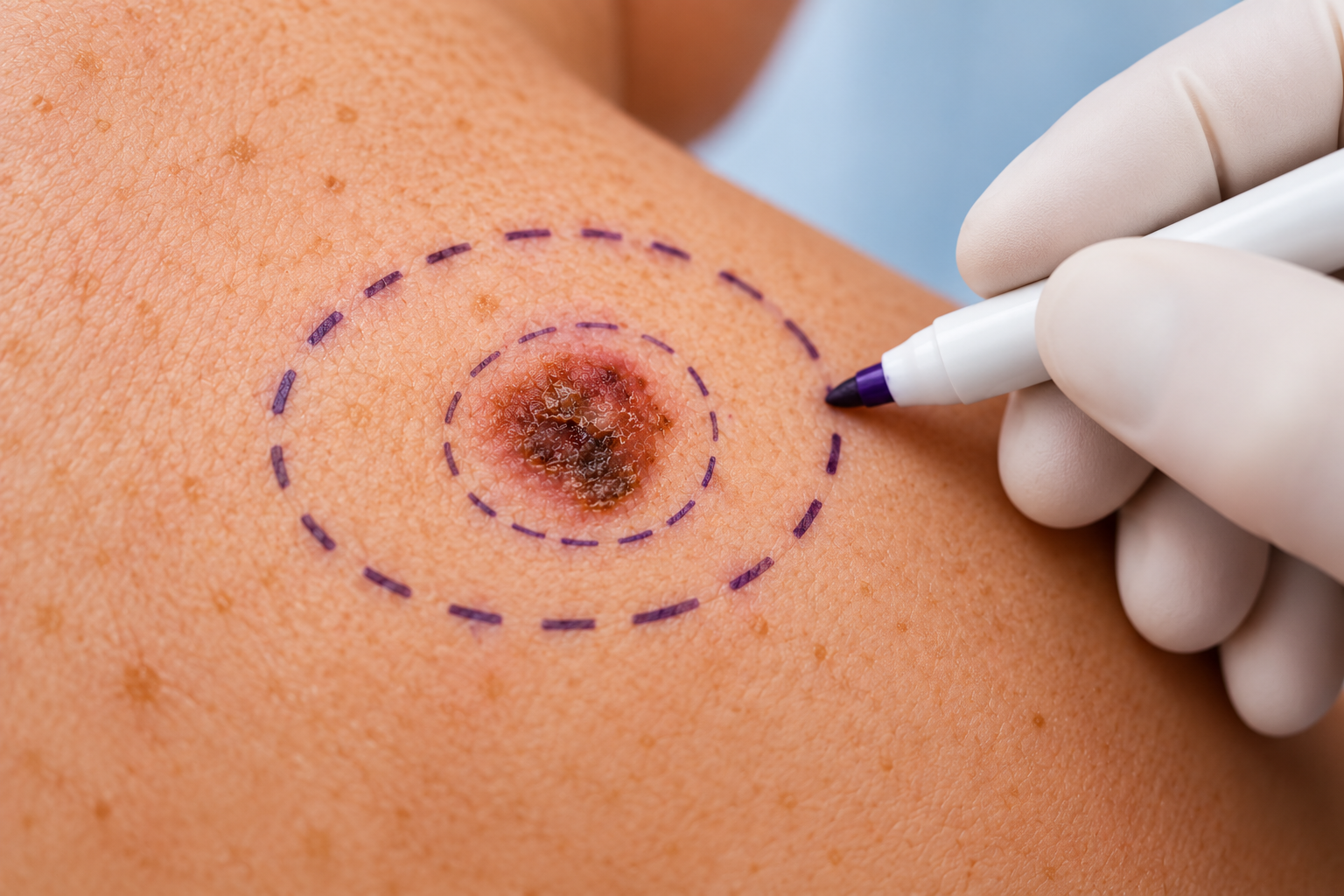
An excision margin is the border of tissue removed around a skin cancer. Cancer cells may extend beyond what is visible on the surface, so surgery usually includes some surrounding skin that appears normal. The aim is to remove the cancer adequately while preserving healthy tissue wherever possible. The removed tissue is sent to a laboratory for examination.
This is a planned and deliberate approach, not an indication that the first procedure failed to identify the cancer completely.
Biopsy Comes First to Establish the Diagnosis
A biopsy provides tissue for a pathologist to examine under a microscope. It establishes what the lesion is and can provide information needed to plan treatment. For a lesion suspicious for melanoma, a doctor will usually remove the whole lesion with a narrow margin when appropriate.
This is called an excision biopsy. Sometimes only part is sampled because of its size or location.
The biopsy is the diagnostic step. Once the result is available, the doctor can recommend the appropriate definitive treatment. Not every skin cancer requires two separate procedures: an initial excision can sometimes both diagnose and adequately treat the lesion.
Understanding what happens after a positive biopsy helps clarify why follow-up procedures are planned.
Clinical Margins and Pathology Margins
Clinical Margins
A clinical margin is the distance the doctor measures on your skin around the lesion or biopsy site before cutting. This is the visible measurement taken during the procedure itself and is used to guide how much tissue will be removed.
Histological Margins
A histological margin is assessed under the microscope: the pathologist checks the distance between the cancer and the specimen’s edges, including the deep edge. These measurements describe different things and provide crucial information about whether all cancer cells were removed.
Understanding Margin Results
A clear or negative margin means no cancer cells were found at the examined cut edge. An involved or positive margin means cancer cells reach an edge, suggesting that some may remain.
A close margin means the cancer lies near an edge; its significance depends on the diagnosis and other findings. Your doctor interprets the report alongside the operation performed and the recommended treatment.
Why Is a Wider Excision Needed for Melanoma?
After an excision biopsy confirms melanoma, most people need a wide local excision. This removes additional skin around the biopsy site to reduce the chance of the melanoma returning there.
The recommended width depends on the melanoma’s type, thickness and location. Thickness is measured in millimetres and is commonly called Breslow thickness.
The margin is therefore based on the pathology and relevant guidance, rather than simply the visible size of the original spot. More surgery at the skin site does not, by itself, mean the melanoma has spread elsewhere. Understanding melanoma characteristics helps explain why different melanomas require different margins.
This planned approach significantly improves outcomes by reducing recurrence risk at the original site.
Do All Skin Cancers Have the Same Margin?
No. Basal cell carcinoma, squamous cell carcinoma and melanoma require different approaches. The cancer’s features, site and risk of recurrence influence the plan. Selected cancers may be treated with Mohs surgery, which examines the removed tissue in stages and removes more where cancer remains. There is no single standard margin for every skin cancer.
This individualised approach ensures each cancer type receives the most appropriate treatment strategy based on its specific characteristics and behaviour.
Questions to Ask Your Treating Doctor
When you receive a biopsy result or a recommendation for further surgery, ask:
- What did the biopsy show?
- Were the margins clear or involved?
- Why is further surgery recommended?
- What clinical margin is planned?
- How will the wound be closed?
- When will I receive the next pathology result?
Writing the answers down can help you explain the plan to your family and understand what comes next. Don’t hesitate to ask for clarification, understanding your treatment plan removes uncertainty and helps you feel more confident about the process.
A Personal Note
Being asked to return for more surgery after a biopsy does not automatically mean the first procedure failed. The biopsy comes first to establish the diagnosis. Once the result is known, the treating doctor follows the relevant guidelines and takes the recommended clinical margin for that particular skin cancer.
This is especially important with melanoma. Even if the biopsy has removed the melanoma and the report says the margins are clear, a wider excision is usually still required to meet the recommended treatment margin.
Ask your doctor whether it is a planned wider excision or whether the pathology shows cancer at the edge. This distinction matters for understanding your treatment plan.
The Bottom Line
Excision margins are a standard part of skin cancer treatment designed to maximise the chance of removing all cancer cells while preserving healthy tissue. Being asked to have more skin removed is a planned part of your treatment, not a treatment failure.
At Skin ChX, I provide skin cancer screening and referral letters when a lesion needs further investigation. Your GP or specialist performs the biopsy and manages treatment. My role includes helping you understand the next step, so that a recommendation for further surgery feels clearer and less overwhelming.