- Chris Comans
- 0 Comments
A rough patch that keeps returning can be easy to dismiss as dry skin. Perhaps you moisturise it, pick off the scale or assume it is simply part of getting older. But a persistent patch on sun-exposed skin may be an actinic keratosis, also called a solar keratosis.
Understanding what this means can help you take the next step without unnecessary worry.
What Is Actinic Keratosis?
An actinic keratosis is an area of abnormal skin cells caused by ultraviolet (UV) damage. It is generally described as a precancerous lesion. That means it has the potential to develop into squamous cell carcinoma (SCC), a type of skin cancer. It is not the same as an invasive SCC, where abnormal cells have grown into deeper layers of the skin.
Some specialists describe actinic keratosis as the earliest part of the SCC disease spectrum. The practical message is that an actinic keratosis deserves attention, but finding one does not automatically mean you have an invasive skin cancer.
It also does not mean that every rough patch is an actinic keratosis. Getting the diagnosis right matters before deciding what to do.
Why Do They Develop?
Sun damage accumulates over time. Outdoor work, gardening, sport, beach days and years of incidental exposure can all contribute. Actinic keratoses commonly develop on the face, ears, balding scalp, neck and backs of the hands. People may otherwise feel completely well.
Having these lesions is a sign of accumulated UV damage and a reason to consider the health of the surrounding skin, too.
In Western Australia, where sun exposure is intense year-round, actinic keratoses are particularly common in people who work or spend significant time outdoors. Understanding skin cancer risk for outdoor workers helps explain why actinic keratoses matter in our region.
What Might You Notice?
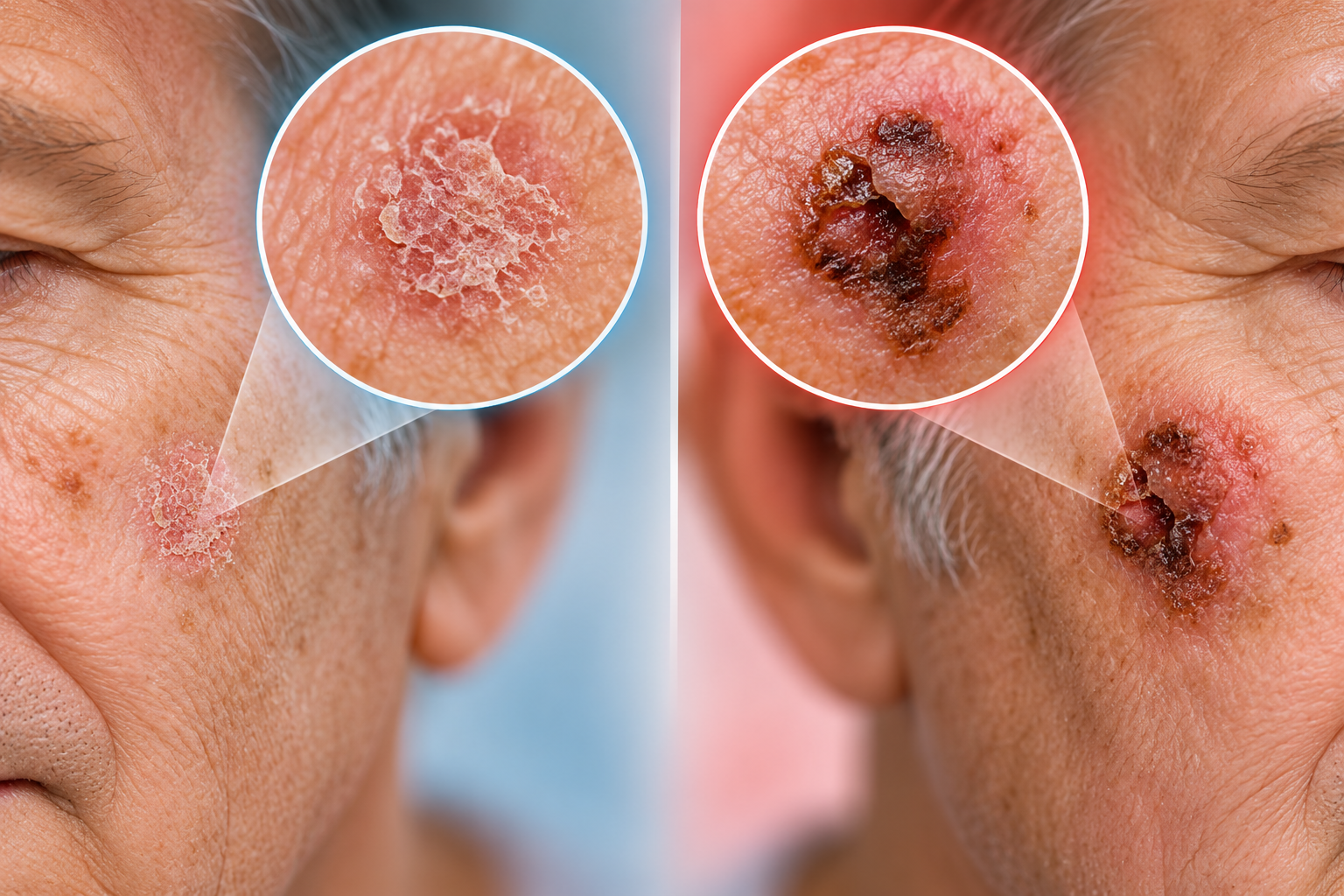
An actinic keratosis can feel gritty or like sandpaper. It may be flat, slightly raised or covered with a thicker scale. Colours vary from skin-coloured to pink, red or brown. Some are tender, while others cause no discomfort. You may feel a small rough area before it becomes obvious in the mirror.
Checking your skin involves more than looking for dark moles.
Pay attention to texture, persistent irritation and changes in spots you already know. A photograph can help you describe a change, but it cannot establish the diagnosis on its own.
Can It Become Skin Cancer?
Some actinic keratoses progress to SCC, while others remain stable or regress. We cannot reliably predict the behaviour of an individual lesion by its appearance alone. A patch that becomes thick, painful, rapidly larger, ulcerated or persistently crusted needs prompt assessment.
A lesion that does not respond to treatment may need a biopsy to exclude SCC. Rather than trying to judge your own risk from a single percentage online, ask what your findings mean for you.
Your medical history, previous skin cancers and the extent of sun damage help guide that conversation. Early warning signs include rapid growth or changing texture.
How Are Actinic Keratoses Treated?
Treatment Options
Treatment depends on the number of lesions, their appearance and location, your general health and whether you have had skin cancer before. A doctor may use liquid nitrogen to freeze individual lesions.
When several lesions affect an area, prescription creams or photodynamic therapy may be considered. These approaches can treat a wider area of affected skin, sometimes called field treatment.
What to Expect
Treatment can cause redness, crusting and discomfort, so discuss the expected reaction and healing time before starting. Ask how to use any prescribed medicine, when to stop and whom to contact if the reaction concerns you.
Monitoring vs Treatment
Some people are offered monitoring instead of immediate treatment, depending on their circumstances. Follow-up helps establish whether the lesion has resolved and whether anything needs reassessment. How often to have skin checks depends on your individual risk factors and medical advice.
Key Points to Remember
If you have a persistent rough patch, don’t feel embarrassed about having it assessed professionally. During a skin check, mention if it keeps returning, feels different or has been treated before. Those details help determine whether referral for medical assessment is needed.
Protecting your skin with shade, protective clothing, a broad-brimmed hat and broad-spectrum SPF 50+ sunscreen remains important. Sun protection is worthwhile even after decades of outdoor exposure.
The Bottom Line
Finding an actinic keratosis is not a skin cancer diagnosis, but it is an important warning sign that your skin has accumulated significant UV damage. It deserves professional assessment and appropriate management.
At Skin ChX, comprehensive full-body skin cancer screening includes careful assessment of rough patches, persistent lesions and any concerning changes. If you have a rough patch that concerns you, arrange a skin check to determine whether it requires treatment or simply monitoring.