- Chris Comans
- 0 Comments
Melanoma is a potentially serious form of skin cancer arising from melanocytes, the cells responsible for producing pigment in the skin. There are several types of melanoma, and one that deserves particular awareness is nodular melanoma.
Nodular melanoma is important because it can behave differently from the more familiar superficial spreading melanoma and may grow relatively quickly.
What Does Nodular Melanoma Look Like?
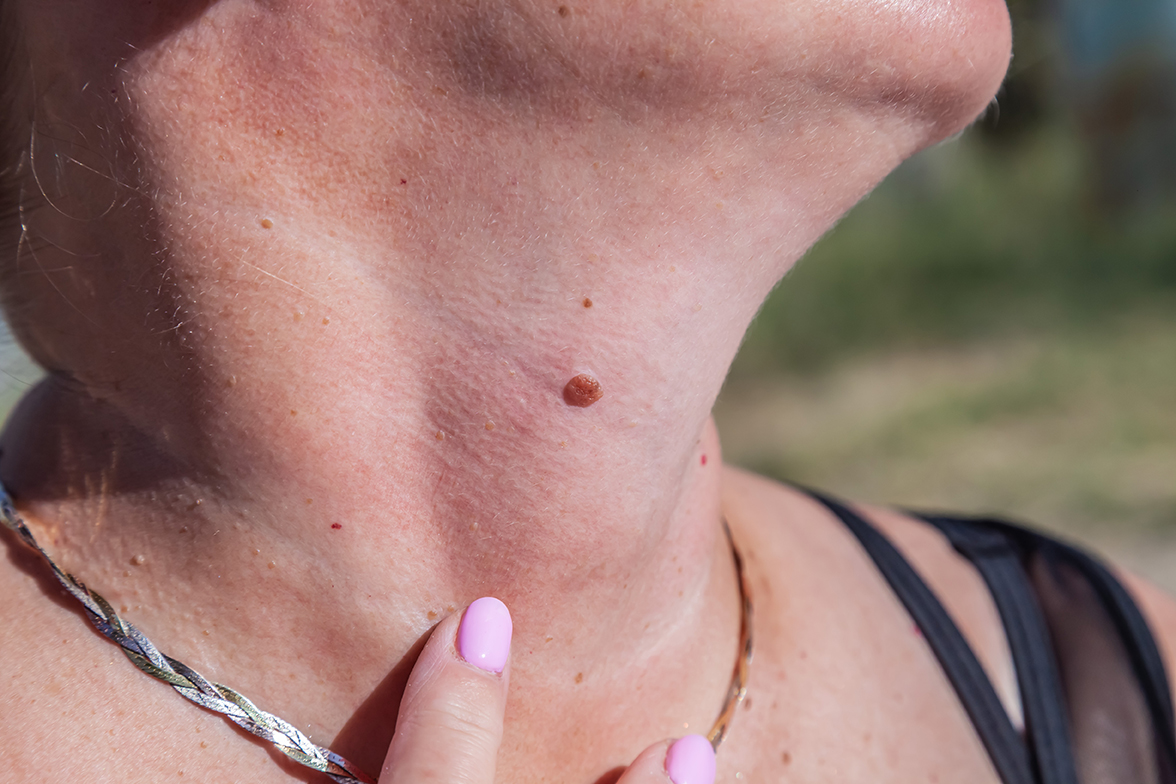
Nodular melanoma commonly develops as a raised or dome-shaped lesion. It may be black, brown, blue or reddish in colour. Importantly, some nodular melanomas contain very little visible pigment and can appear pink or skin-coloured.
This means that looking only for dark or irregular moles is not enough. A nodular melanoma may appear as a new lump rather than as a flat mole that gradually changes over many years.
Understanding different melanoma presentations helps you recognise atypical forms.
How Is Nodular Melanoma Different?
Many melanomas initially have a period of growth along the more superficial layers of the skin before progressing more deeply. Nodular melanoma has a greater tendency towards early vertical growth into the skin.
This matters because the depth of invasion is an important factor in melanoma staging and prognosis.
Nodular melanoma may therefore become clinically significant over a relatively short period. Growth itself can be an important warning sign that shouldn’t be ignored.
Beyond the ABCDE Rule
Many people know the ABCDE warning signs for melanoma: A – Asymmetry, B – Border irregularity, C – Colour variation, D – Diameter, E – Evolution. These remain useful signs of melanoma. However, nodular melanoma does not always display the classic ABCDE features, particularly during its earlier development.
Another useful approach is the EFG rule: E – Elevated, the lesion is raised above the surrounding skin; F – Firm, it feels firm when touched; and G – Growing, it is noticeably increasing in size.
Of these features, ongoing growth is particularly important. A new raised lesion that continues to enlarge should be assessed even if it is symmetrical, evenly coloured or relatively small. Early warning signs matter for all melanoma types, including nodular.
Nodular Melanoma Can Be Colourless
Some nodular melanomas are amelanotic, meaning they contain little visible pigment. An amelanotic nodular melanoma may therefore resemble a pink bump, irritated lesion or other apparently harmless skin growth.
This is why skin examination involves assessing much more than pigmentation. Colourless skin cancers are particularly easy to overlook without professional assessment.
The Importance of Dermoscopy
Dermoscopy allows a skin cancer screening practitioner or medical practitioner trained in dermoscopy to examine structures and patterns that cannot be adequately assessed with the naked eye.
If a lesion demonstrates suspicious features, referral for medical assessment and biopsy may be required.
The definitive diagnosis of melanoma is made through histopathological examination of tissue.
Pay Attention to Something New
One of the most useful things you can do is become familiar with what is normal for your own skin. If a new lump appears and continues to grow, don’t wait for it to develop every traditional melanoma warning sign before seeking assessment.
This is particularly important for a lesion that is new and growing, raised and firm, changing noticeably over weeks or months, bleeding or ulcerating, different from your other lesions, or pink or red and persistently enlarging. Knowing when to seek help is essential for nodular melanoma detection.
The Bottom Line
Melanoma is highly treatable when detected at an early stage. Understanding that nodular melanoma can grow differently and may not always look like the classic melanoma shown in awareness campaigns can help people recognise when something needs professional assessment.
When it comes to melanoma, change and growth matter just as much as colour. If you notice a new raised bump that’s growing, don’t delay having it checked.