- Chris Comans
- 0 Comments
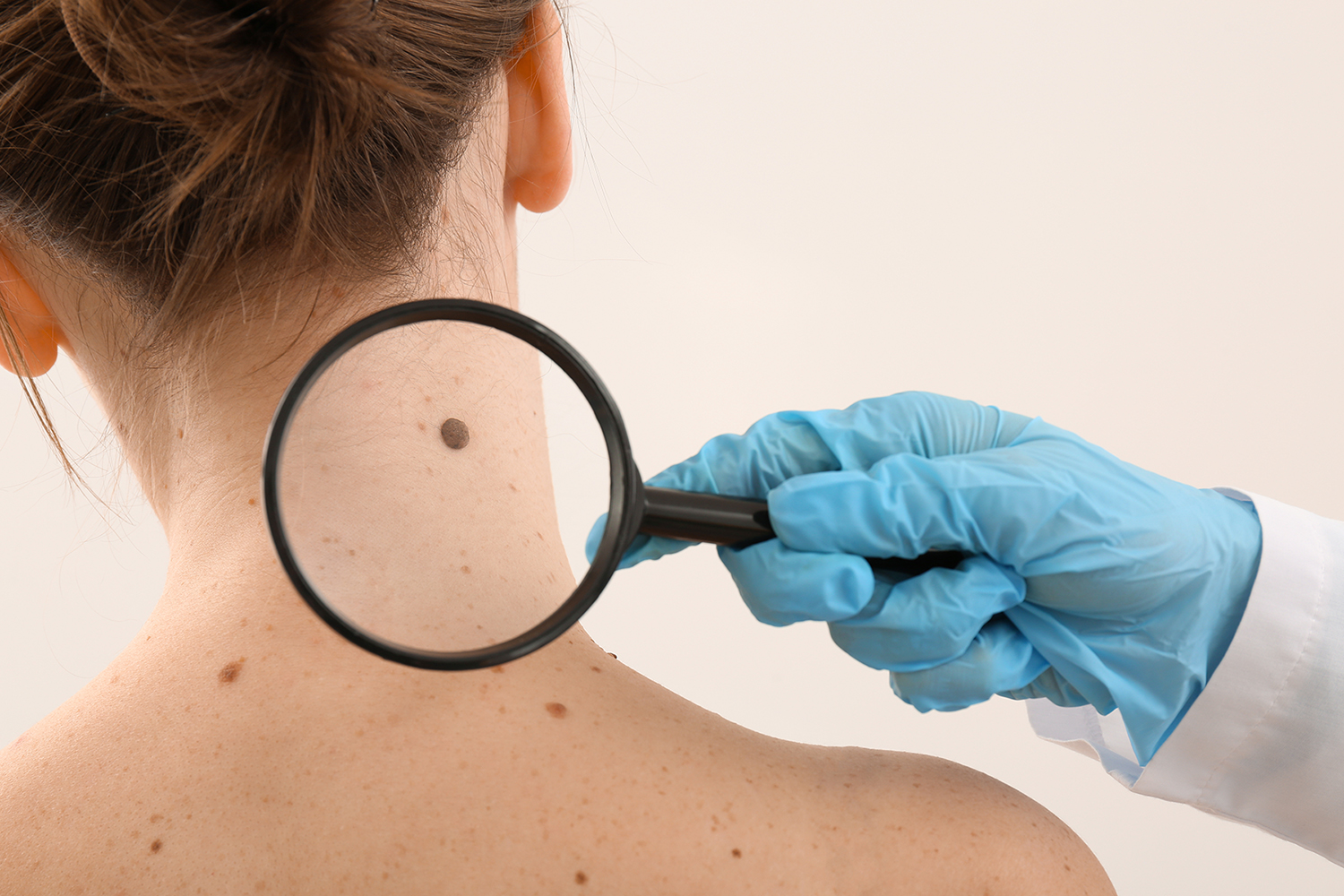
Most moles go completely unnoticed. They sit quietly on the skin for years without causing any symptoms at all. That is why many people become concerned when a mole suddenly becomes painful, tender, sore, or uncomfortable.
While a painful mole does not automatically mean skin cancer is present, any new symptom affecting a mole deserves attention. Understanding the possible causes can help determine when professional assessment may be appropriate.
Why Do Moles Become Painful?
There are many harmless reasons why a mole may become sore. Common causes include friction from clothing, shaving injuries, accidental trauma, scratching, inflammation, and infection.
Moles located on the scalp, neck, waistline, shoulders, and beneath bra straps are particularly prone to irritation because they are frequently rubbed or bumped during daily activities.
For example, a raised mole on the neck may become irritated by a shirt collar, while a scalp lesion may become tender following a haircut. In many cases, discomfort resolves once the source of irritation is removed.
However, if symptoms persist or continue to worsen, further assessment may be warranted.
Is Pain a Common Sign of Skin Cancer?
Interestingly, many skin cancers cause no symptoms at all during their early stages. This means that the absence of pain does not necessarily indicate that a lesion is harmless, and the presence of pain does not automatically mean cancer is present.
Pain should be considered alongside other changes occurring within the lesion. Many suspicious lesions are identified because of visible changes rather than symptoms. Understanding early warning signs helps explain why visual changes matter.
This is why regular skin checks remain important, even when no discomfort is present.
When Does Pain Become More Concerning?
A painful mole deserves closer attention when it is accompanied by other changes. Warning signs may include increasing size, darkening colour, multiple colours appearing within the lesion, irregular borders, bleeding, crusting, persistent itching, ongoing inflammation, and changes in shape.
A mole that is both changing and becoming symptomatic should be professionally assessed. One useful concept often discussed during skin examinations is the “ugly duckling sign.” If one mole looks noticeably different from your other moles or begins behaving differently, it may warrant closer evaluation.
Can Melanoma Be Painful?
Yes, melanoma can occasionally become tender or painful. However, many melanomas remain completely painless, particularly during their early stages. Because melanoma can present in many different ways, relying on pain alone can be misleading. Understanding melanoma specifically helps explain its varied presentations.
Some melanomas are detected purely because of changes in colour, size, shape, or dermoscopic appearance rather than symptoms. This highlights the importance of becoming familiar with your skin and paying attention to lesions that evolve over time.
Importantly, many melanomas arise as new lesions rather than developing from pre-existing moles. Any new spot that is changing or behaving unusually should also be assessed.
What About Other Types of Skin Cancer?
Pain may be more commonly associated with certain non-melanoma skin cancers. Squamous cell carcinoma (SCC), for example, may become tender, inflamed, or painful as it develops. Some SCCs present as crusted or ulcerated lesions that cause ongoing discomfort.
Basal cell carcinoma (BCC) may also become irritated, bleed intermittently, or develop tenderness, particularly if the lesion repeatedly breaks down and reforms. Understanding different types of skin cancer helps clarify why these cancers require professional assessment.
Because these cancers can resemble harmless skin conditions, it is often impossible to determine the cause based solely on appearance.
The Role of Dermoscopy
Many skin lesions look similar to the naked eye. A painful mole may simply be inflamed or irritated. Alternatively, it may contain features that warrant further investigation.
Dermoscopy allows trained practitioners to visualise structures beneath the skin surface that cannot be seen without magnification and specialised lighting. Patterns of pigment distribution, blood vessels, and other microscopic features can provide valuable clues regarding whether a lesion appears benign or whether referral may be appropriate.
The role of dermoscopy in skin cancer detection explains how this technology improves assessment.
Dermoscopy has become an important component of modern skin cancer screening and significantly improves the assessment of pigmented lesions.
Should You Monitor It or Book a Skin Check?
If a mole becomes painful following obvious trauma or irritation, it may be reasonable to monitor it for a short period while avoiding further injury. Taking photographs can also be useful, as they provide a record of any changes over time.
However, if pain persists, recurs, worsens, or is accompanied by visible changes, arranging a professional skin examination is recommended. Seeking assessment does not mean something serious is present. In many cases, a skin check simply provides reassurance and establishes a baseline for future monitoring.
The Bottom Line
A painful mole is not automatically a sign of skin cancer, but it should not be ignored. Any mole that develops new symptoms, changes in appearance, or begins behaving differently from your other moles deserves attention.
At Skin ChX, we provide thorough full-body skin cancer screenings using dermoscopy to assess changing or symptomatic lesions and identify features that may require further investigation.