- Chris Comans
- 0 Comments
When it comes to checking your skin, many people assume all skin checks are the same. In reality, the quality and depth of assessment can vary significantly depending on how the check is performed and the tools used.
Understanding these differences can help you make a more informed decision about your skin health.
What Happens in a Standard Skin Check?
A general skin check often involves a visual assessment of the skin. This can identify obvious lesions or areas of concern, but early skin cancers don’t always present clearly to the naked eye.
This is particularly important in Australia, where we have one of the highest rates of skin cancer in the world. In Western Australia, with high UV exposure year-round, early detection is critical. Understanding why skin cancer is so prevalent in Australia helps explain why thorough screening matters.
What Is Specialist Skin Cancer Screening?
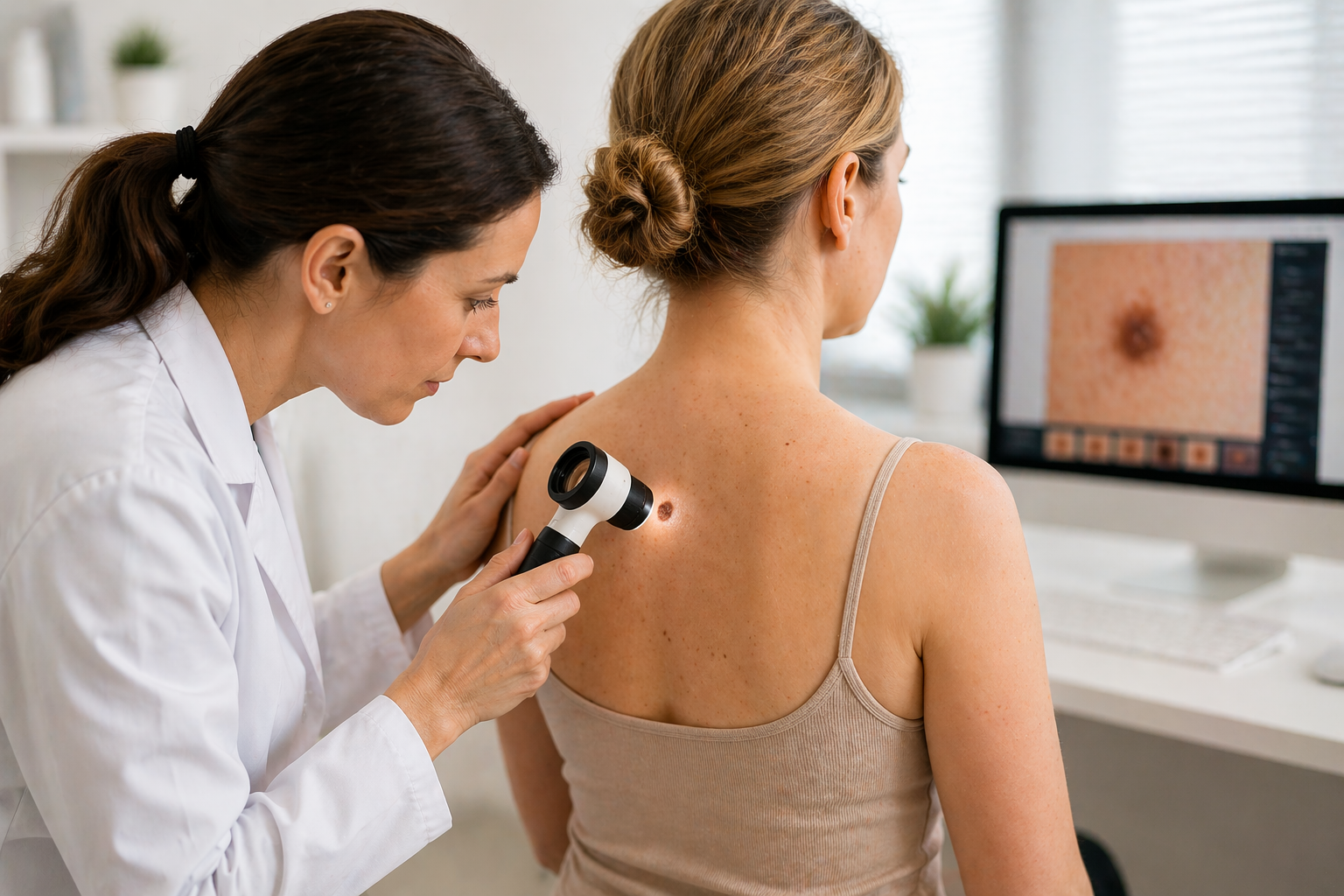
A more advanced approach to skin checks involves dermoscopy, which provides magnified imaging of skin structures beneath the surface, high-resolution imaging and documentation, full skin assessments (not just spot checks), and detailed reporting with clinical notes and images.
This allows subtle changes and early-stage skin cancers to be identified before they become more serious. Understanding what to expect during a professional skin check helps you evaluate the quality of care you’re receiving.
The use of advanced dermoscopy techniques is essential for accurate detection. These tools reveal patterns and structures that are invisible to the naked eye, making it possible to identify concerning lesions at their earliest stages.
Why Does This Matter?
Many skin cancers, particularly melanoma, can be difficult to detect in their early stages without dermoscopic assessment. They may look harmless or mimic benign lesions. Understanding different types of skin cancer helps you recognise why professional assessment is essential.
Early detection significantly improves outcomes. When identified early, most skin cancers can be treated effectively with minimal intervention. Knowing how to tell if a spot is dangerous requires professional expertise that goes beyond visual inspection alone.
The Risk of Missed Detection
Without dermoscopy, subtle melanomas can be missed entirely. Amelanotic melanomas (non-pigmented lesions) often appear as pink or flesh-coloured spots that look completely benign. Early basal cell carcinomas can resemble minor skin irritations. Squamous cell carcinomas in their early stages may appear as slightly rough patches that people dismiss as dry skin.
These are exactly the types of lesions that benefit most from specialist screening, where technology and expertise combine to reveal what visual inspection alone cannot detect.
Access and Barriers in Australia
In Australia, accessing specialist care can sometimes involve additional steps, including referrals and wait times. This can delay assessment, particularly for people living in regional or remote areas.
That’s why accessible, high-quality screening services are so important, especially for outdoor workers, FIFO teams, and regional communities. Understanding which industries face the highest risk highlights why workplace screening programmes matter.
Regional WA Access Challenges
Western Australia’s vast geography means many communities have limited access to specialist screening services. Wait times in some regional areas can stretch for months, and travel to Perth for assessment may not be practical for everyone.
This creates a significant barrier to early detection in areas where UV exposure is often highest and outdoor work is most common.
Community-Based Solutions
Skin ChX addresses these access challenges by bringing professional skin cancer screening directly to communities across Western Australia. Our practitioners travel to mining sites, rural towns, and coastal areas, ensuring distance doesn’t prevent early detection.
We provide the same level of thorough, dermoscopy-supported assessment regardless of location, making specialist-level screening accessible to people who might otherwise face significant barriers to care.
The Bottom Line
Not all skin checks are equal. A thorough, technology-supported assessment provides a higher level of accuracy and documentation, which is essential for ongoing monitoring of your skin.
The difference between a visual-only check and a comprehensive dermoscopic assessment can be the difference between catching a melanoma at stage one or discovering it much later when treatment becomes more complex.
If you’re due for a skin check, or if you’ve noticed something new or changing, don’t rely on visual assessment alone. Seek out screening that uses dermoscopy as standard, provides full-body examination, and offers detailed documentation for future comparison.
In Western Australia’s high-risk UV environment, this level of care isn’t excessive. It’s essential.