- Chris Comans
- 0 Comments
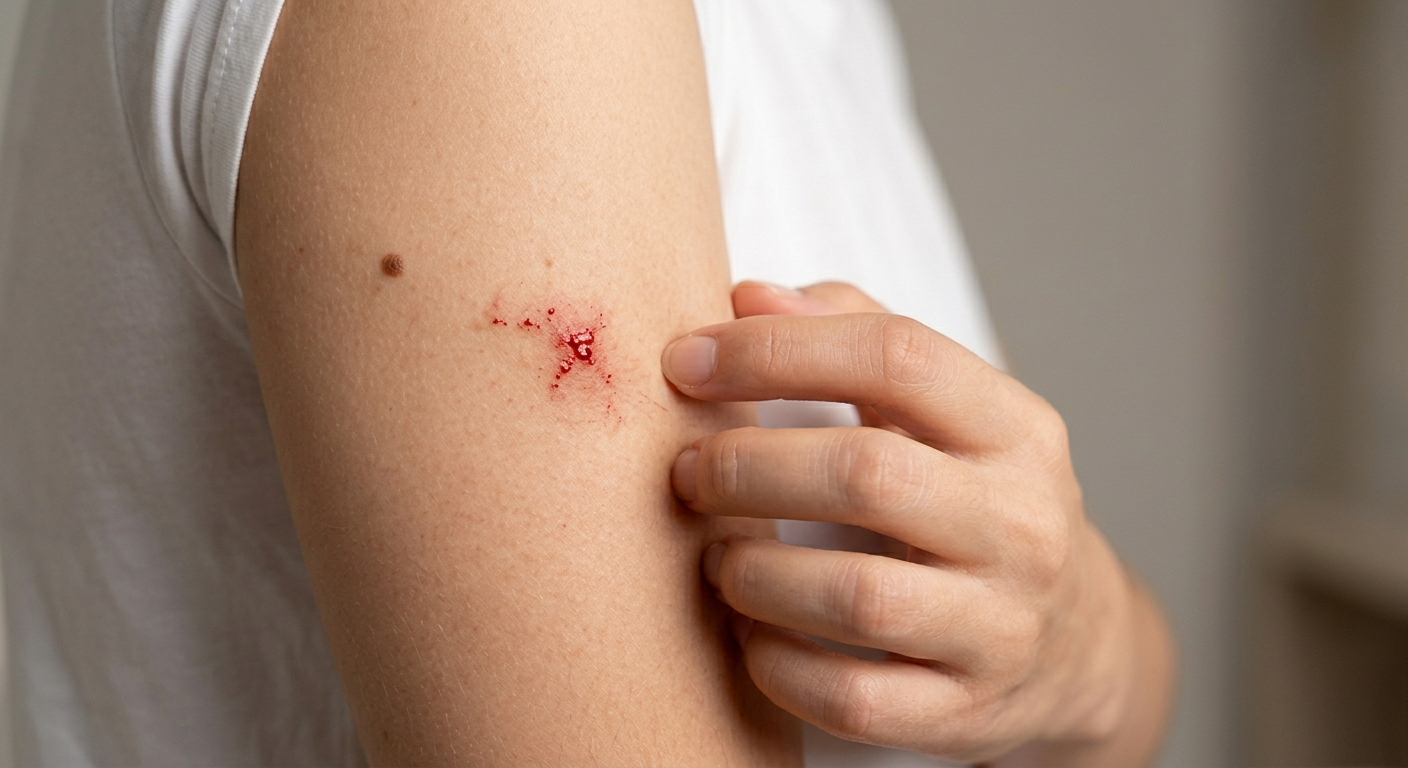
It’s something many people experience. You notice a mole or spot, it gets knocked, scratched, or irritated, and suddenly it bleeds. It can be alarming. And the first question most people ask is: should I be worried?
Why Do Moles Bleed?
Not all bleeding is a sign of skin cancer. Moles and skin lesions can bleed for simple reasons, including scratching or picking at the skin, friction from clothing or shaving, or accidental knocks or minor trauma.
Some lesions, particularly raised ones, are more prone to bleeding when irritated. The skin itself is delicate, and even a small amount of trauma can cause bleeding. In many cases, this is completely harmless.
But it’s important not to dismiss it too quickly.
When Should You Pay Attention?
Bleeding becomes more concerning when it happens without obvious trauma, repeatedly, or alongside changes in the lesion. Understanding what signs indicate danger helps you recognise when professional assessment is needed.
These changes might include growth in size, darkening or multiple colours, irregular or uneven borders, crusting, ulceration, or scabbing, or a sore that doesn’t heal.
Any of these signs, especially when combined with bleeding, should be assessed properly. Knowing the early warning signs helps you act quickly.
The Important Point
Bleeding on its own does not confirm skin cancer. But it should never be ignored. Some skin cancers can present this way, including melanoma, basal cell carcinoma, and squamous cell carcinoma.
Not all of these look dramatic in the early stages. In fact, some can appear quite subtle, particularly when they first develop. Understanding how different types of skin cancer present helps you recognise what needs attention.
A Common Scenario
A very common story is: “I thought I just knocked it.” And sometimes, that’s exactly what has happened. But other times, the bleeding is the first sign that the lesion is not behaving normally.
In many cases, people delay having it checked because the bleeding settles, it seems minor, or life gets busy. Weeks or months can pass before it’s reassessed. This delay can be risky, particularly in Western Australia where skin cancer rates are among the highest in the world.
Why Proper Assessment Matters
A proper skin assessment involves more than just looking at the surface. It should include clinical examination of the lesion, dermoscopic assessment (magnified evaluation beneath the skin surface), consideration of your skin history and risk factors, and documentation for monitoring if required.
Dermoscopy allows practitioners to see structures and patterns that aren’t visible to the naked eye. This technology is essential for accurate diagnosis. Professional skin checks use these advanced tools to assess lesions properly.
The Risk of Waiting
One of the biggest risks with a bleeding lesion is assuming it will settle on its own. While some do, others represent early skin cancers that require treatment.
Delaying assessment can lead to growth of the lesion, more invasive treatment, and increased complexity in management. Early detection almost always leads to simpler outcomes.
Understanding how fast skin cancers can grow reinforces why prompt assessment matters.
What Should You Do?
If a mole or spot has bled, the safest approach is simple: get it checked. Even if it seems minor. Even if the bleeding has stopped. Even if you think you just scratched it.
Book an assessment with a qualified skin cancer screening practitioner. They can determine whether the bleeding was simply due to trauma or if the lesion requires further investigation or treatment.
For West Australians in regional areas, Skin ChX brings professional screening directly to communities across the state, ensuring distance doesn’t prevent early detection.
The Bottom Line
Not every bleeding mole is skin cancer. But some are. And you can’t reliably tell the difference without the right level of assessment.
If something has bled, changed, or doesn’t feel quite right, have it assessed properly. Because when it comes to skin cancer, early detection can make all the difference.
Don’t wait for bleeding to happen again or for other symptoms to appear. A single episode of unexplained bleeding warrants professional evaluation, particularly in WA’s high-risk UV environment.